Revisit Iconic Dinosaur Park Management with Strategic Depth
Jurassic World Evolution: Return To Jurassic Park, developed and published by Frontier Developments, brings players back to the original film locations through a dedicated campaign set after the events of Jurassic Park. This paid DLC expansion builds on the base game’s management framework by adding classic characters, environments, and dinosaur designs while keeping the familiar economic and welfare systems intact. It targets players who enjoy simulation-style park building enriched with strong nostalgic elements rather than new mechanical layers.
Top Recommended Alternative

A Hands-On Approach to Dinosaur Park Management
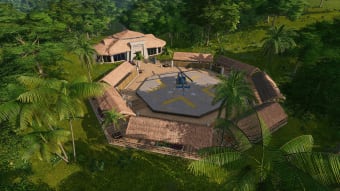
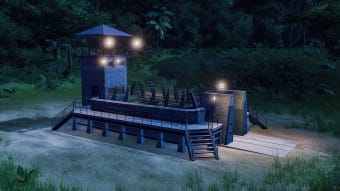
The expansion focuses on restoring and managing iconic facilities such as the Visitor Center and newly added structures designed in the 1993 aesthetic. These buildings operate within the same management systems seen in the base game, where players monitor dinosaur welfare, maintain power infrastructure, and respond to guest needs through established menus and tools. Instead of direct, first-person interactions, the gameplay remains rooted in strategic oversight, using existing management interfaces to handle park issues and maintain stability.
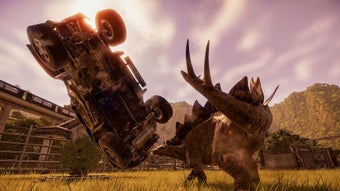
Beyond general park operations, the DLC introduces new mission scenarios that include repairing damaged systems, managing escaped dinosaurs, and handling environmental challenges. These tasks rely on the base game’s mechanics—dispatching ranger teams, maintaining enclosures, and stabilizing park finances—rather than puzzle mechanics or direct creature confrontation. The added objectives help create situational pressure while remaining consistent with the original game’s structure.
Integrated Genetic Experimentation Adds Strategic Layers
Genetics in this DLC stay aligned with the base game’s approach: modifying dinosaur genomes to influence traits such as lifespan, resilience, or appearance. Return to Jurassic Park does not introduce hybridization, cloning workflows, or multi-step lab procedures beyond the existing genome modification system. Instead, it incorporates classic Jurassic Park visual models and new species like the Compsognathus and Pteranodon, which expand the roster without overhauling genetic systems or adding new experimental mechanics.
The genetic system continues to function through the standard process of completing research, acquiring genome percentages, and selecting modification options before incubation. The DLC materials do not outline new DNA sources or expanded trait systems, and the impact on park dynamics remains consistent with the base game’s behavior patterns. The emphasis is primarily thematic, grounding the experience in the style of the original film rather than altering simulation depth.
A Balanced Expansion Rooted in Nostalgia and Strategy
This DLC enriches the core experience through new missions featuring returning film characters such as Dr. Alan Grant, Dr. Ellie Sattler, and Dr. Ian Malcolm, all voiced by their original actors. Players revisit Isla Nublar and Site B with layouts and aesthetics that reflect the early 1990s setting, offering fresh scenarios that integrate with familiar management tasks. The expansion balances economic oversight, dinosaur welfare, and the narrative beats connected to rebuilding the classic park.
While Return to Jurassic Park adds meaningful thematic content, its scope leans toward enhancing the atmosphere rather than reinventing gameplay systems. Mission details focus on park restoration and containment challenges, and the narrative framing supports the nostalgic tone without diverging into new structural mechanics. Players looking for expanded depth may find the additions modest, but those invested in the franchise’s classic locations will find the thematic integration satisfying.
Focused and Effective for Dinosaur Park Fans
Overall, Jurassic World Evolution: Return To Jurassic Park delivers a cohesive addition that reinforces the base game’s strengths while presenting locations and species tied closely to the original film. It expands the experience through mission-driven scenarios and authentic voice acting, keeping its complexity grounded in familiar management gameplay. Some aspects, such as genetics and deeper simulation layers, remain unchanged, which limits innovation but supports a stable, accessible extension of the core formula. For fans of Jurassic Park aesthetics and narrative framing, it offers a well-crafted continuation of the management experience.